

Why Kenya Is Emerging as a Leader in e-Fuels and Green Energy in Africa
Updated: Apr 28

By Felix Semekete Opilli
Project Management & International Relations Specialist, East Africa
Kenya is rapidly positioning itself at the forefront of Africa’s energy transition - and increasingly, the conversation is turning toward e-fuels in Kenya as a major opportunity for sustainable growth.
With abundant renewable resources, a supportive policy environment, and growing international interest, Kenya has the potential to become a key hub for synthetic fuels and green hydrogen production in Africa.
What Are e-Fuels and Why Do They Matter?
E-fuels (electrofuels) are synthetic fuels produced using renewable electricity, typically through green hydrogen. They offer a low-carbon alternative to fossil fuels, particularly in sectors that are difficult to electrify, such as:
Aviation
Shipping
Heavy industry
As global demand for cleaner energy solutions accelerates, e-fuels are becoming a critical part of the energy transition - and countries with strong renewable capacity are best placed to lead.

Why Kenya Is Ideal for e-Fuel Development
1. Abundant Renewable Energy Resources - Kenya already generates a significant share of its electricity from renewable sources, including:
Geothermal energy from the Rift Valley
Wind power, such as the Lake Turkana Wind Power project
Solar energy with strong year-round irradiation. This renewable foundation is essential for producing green hydrogen, the key building block of e-fuels.
2. Strategic Geographic Position
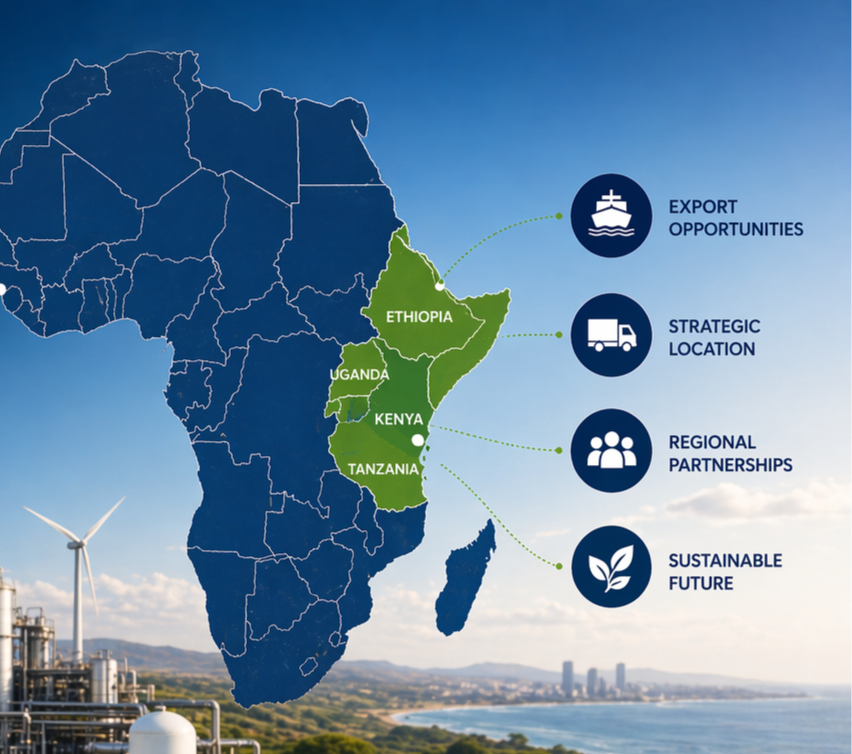
Kenya’s location along the East African coast provides direct access to global shipping routes, making it well placed to:
Export e-fuels to Europe and Asia
Support sustainable aviation fuel (SAF) supply chains
Act as a regional energy hub
This geographic advantage strengthens the case for large-scale e-fuel production in Kenya.
3. Policy Momentum and Investment Potential
Kenya has demonstrated leadership in renewable energy policy, creating a strong foundation for future e-fuel development.
Government support, combined with increasing interest from international investors, is helping to:
Accelerate green hydrogen feasibility projects
Encourage public-private partnerships
Position Kenya as a destination for clean energy investment
Growing Recognition of Kenya’s Green Energy Potential
Kenya’s role as a future energy leader is gaining wider recognition. In a recent national media article, our East Africa General Manager highlighted why the country is uniquely positioned to become a green energy powerhouse in Africa.
This growing visibility reflects a broader shift: global stakeholders are increasingly looking to countries like Kenya to drive the next phase of the energy transition.
The Role of E-Fuels in Africa’s Energy Future
While electrification will play a major role in decarbonisation, it cannot solve every challenge. This is where e-fuels in Kenya and across Africa can make a significant impact.
E-fuels can:
Decarbonise long-distance transport
Enable energy storage and export
Support industrial growth while reducing emissions
For Africa, this represents not just an environmental opportunity - but an economic one, enabling countries to participate in global clean energy markets.

Galetech’s Perspective: Supporting the Transition
At Galetech, we see strong potential for e-fuel development in Kenya as part of a broader renewable energy strategy.
Our focus is on:
Supporting sustainable infrastructure development
Enabling renewable energy integration
Contributing to long-term, scalable energy solutions
As the market evolves, collaboration between governments, developers, and investors will be essential to unlocking Kenya’s full potential.
Looking Ahead
The foundations for e-fuels in Kenya are already in place. With the right combination of investment, policy support, and infrastructure development, the country could play a leading role in shaping Africa’s clean energy future.
As momentum continues to build, Kenya stands not only as a national success story - but as a model for how emerging markets can lead in the global energy transition.


